Trust is the cornerstone of legal success, and integrity is what builds it. Discover how honesty, reliability, and accountability drive stronger legal outcomes and long-term partnerships.


Experienced. Reliable. Comprehensive.
Trust is the cornerstone of legal success, and integrity is what builds it. Discover how honesty, reliability, and accountability drive stronger legal outcomes and long-term partnerships.

Process servers are vital to the legal system, ensuring the accurate and timely delivery of legal documents. 360 Legal provides reliable service of process, protecting legal professionals from the risks of improper service. Our commitment to integrity and client protection ensures that your legal documents are in capable hands, allowing you to focus on your case with confidence. Contact 360 Legal today for process service with integrity.

A detailed examination of how integrity in process service shapes successful client relationships, from initial consultation through final documentation. Learn how ethical practices protect your interests and streamline legal proceedings.

Confused about who can accept legal papers for you in Colorado? This guide dives into C.R.C.P. 4(e)(1), detailing the rules for substituted service—when documents can be left with another person at your home or workplace. Understand the precise requirements for valid service, your rights, and how professional process servers ensure full compliance, providing clarity and confidence in Colorado’s legal process.

Transparency and honesty in process service protect legal outcomes. Clear communication and ethical practices ensure successful case resolution.

Cutting-edge technology is revolutionizing process serving, enhancing transparency, and improving efficiency for family law and probate attorneys.

Examine real court cases where process service integrity made the crucial difference between case success and dismissal. Learn from actual examples how proper service protects legal interests and prevents costly setbacks in litigation.

Optimization Content for the Blog Post
Slug: navigating-challenges-serving-evading-defendants
WordPress Excerpt:
Serving legal documents to evading defendants can be challenging. This post provides strategies to ensure successful service of process, including diligent investigation, alternative service methods, and working with the court.

Florida Statute 48.121 requires all subpoenas for state agencies be delivered in duplicate to the Department of Financial Services—never directly to the agencies themselves. The Department processes and returns signed confirmation, with agencies required to respond within 10 days unless otherwise specified. Following this precise procedure ensures your subpoena is legally valid when dealing with any Florida state entity. Don’t risk case dismissal due to improper service.

Ensure the success of your legal cases with a bulletproof service of process. Learn key strategies for timely and accurate service, including partnering with a reliable process server, diligent investigation, and strategic service methods.
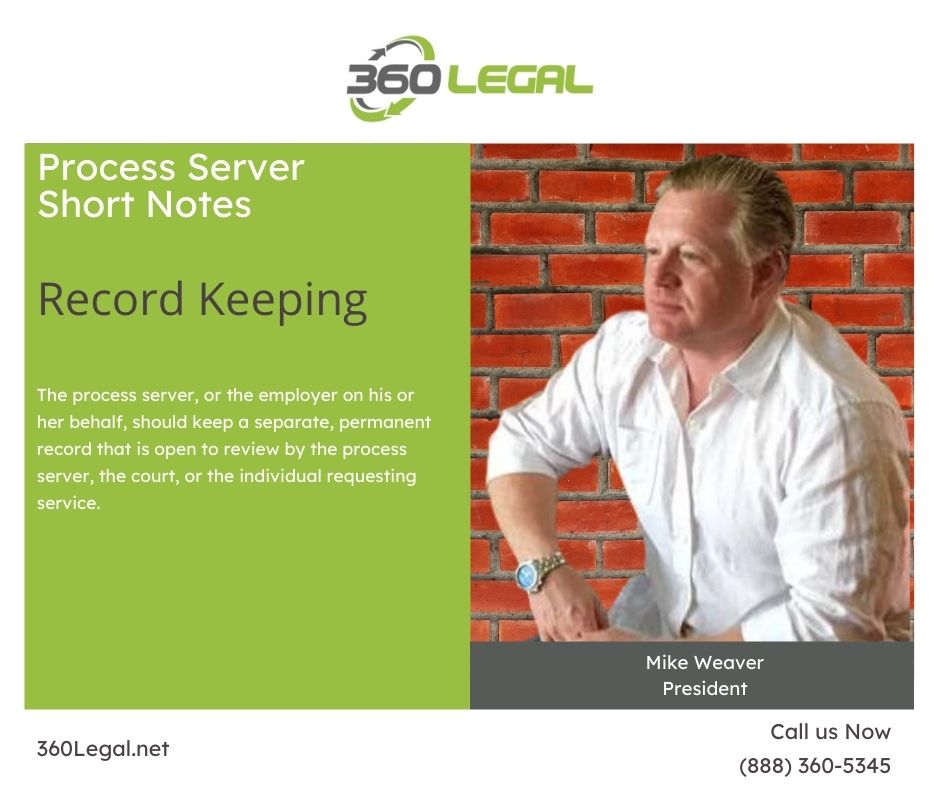
Proper record-keeping is a critical component of being an effective and ethical process server. Maintaining detailed, accurate records not only ensures compliance with legal requirements but also protects the process server in the event questions about service arise. Here are some best practices process servers should follow:
The process server, or the employer on his or her behalf, should keep a separate, permanent written record of each service attempt and completion. This record should include key details such as the date, time, location, parties involved, outcome, etc. The record should be detailed and complete enough that another party reviewing it could easily determine what transpired. These records must be maintained for a reasonable period per state law, generally 2–10 years.
Process server records are not private and may be requested and reviewed by courts, attorneys, parties in a case, or regulators to validate service. Keeping clear, comprehensive written records facilitates any auditing or verification processes. Servers should promptly comply with record requests and have systems in place to access past records.
In addition to written records, process servers should take date- and time-stamped photos documenting service attempts whenever feasible for additional verification. Common practice is photographing the location, the party served, noteworthy incidents (e.g. a party refusing service), etc. Maintain these photographic records just like the written records above.
Having a log of daily activity that details every stop, attempt, and service completed can also bolster record-keeping accuracy. The work log creates a timeline showing the process server's continual course of action as they go about service.
The process server must complete an Affidavit of Service signed under oath for each completed service. This legal document records key facts and is filed with the court. Keep copies of all Affidavits of Service with the other written service records above.
Following these best practices for comprehensive, detailed record keeping helps process servers demonstrate accountability, comply with changing record retention laws, and defend against any accusations of improper service. Maintaining meticulous records should be standard operating procedure for ethical, reputable process servers nationwide. Comprehensive records protect all parties when questions arise.




"5 star service ! prompt serving, helpful, professional . "
"Mike is awesome. Our firm has hired him on several occasions and we are very happy with his work. His prompt serving, helpful, professional and always in communication. I recommend him highly! "
"360Legal provides speedy and easy to use Process Service that is flexible, and very transparent with nearly instant reporting. It is very helpful for us to be able to track the status of our process service jobs, especially when they are time sensitive. "