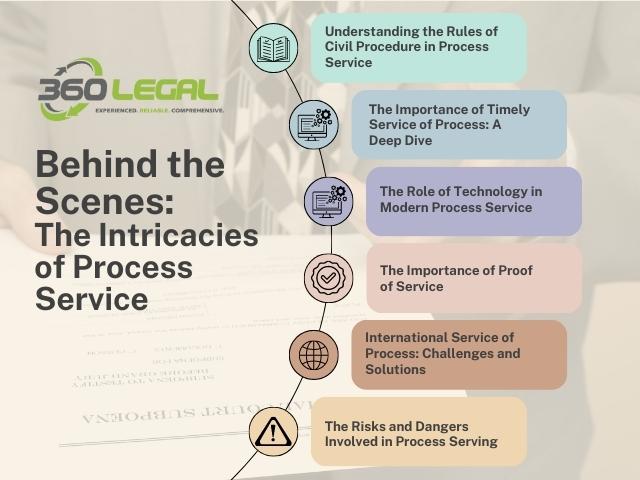
Behind the Scenes: The Intricacies of Process Service
Understanding the Rules of Civil Procedure in Process Service
At 360 Legal, our role extends beyond the simple delivery of legal documents. We are an integral part of the justice system, ensuring that due process is upheld and all involved parties receive proper notice about legal actions affecting their rights. A fundamental part of this responsibility involves understanding and adhering to the Rules of Civil Procedure. These rules, which vary by jurisdiction, govern the conduct of all aspects of civil cases, including how documents must be served.
What Are the Rules of Civil Procedure?
The Rules of Civil Procedure govern how civil cases are handled in the court system. They encompass everything from how a lawsuit is initiated to how evidence is presented to how a trial is conducted. For process servers like 360 Legal, the most relevant aspects of these rules concern how to properly serve court documents to the parties involved.
Understanding Service of Process
“Service of process” refers to the procedure by which parties are given official notice of a lawsuit or court proceeding. This is where process servers come in. It’s our job to deliver these critical documents, such as summons, complaints, and subpoenas, under the Rules of Civil Procedure.
Rules Vary by Jurisdiction
It’s important to note that the specifics of these rules can vary significantly by jurisdiction. For example, in some states, any adult not a party to the lawsuit can serve papers. In others, the server must be a sheriff or a licensed, registered, or bonded process server.
Even the methods of service can vary. Personal service (directly handing the documents to the person) is generally the preferred method, but alternative methods such as substitute service, mail service, or even newspaper publication may be allowed under certain circumstances.
The Importance of Proper Service
Proper service of process is crucial, as it ensures that everyone’s rights are protected. If service is not done according to the rules, the court may deem it invalid, potentially leading to delays, additional costs, or even dismissal of the case.
A Real-World Example: Serving a Subpoena in Florida
To illustrate how these rules apply, let’s consider a fictional but realistic example. Suppose our client, a law firm, has asked us to subpoena a witness in a personal injury case. The witness lives in Florida, and the case is being heard in a Florida court.
Understanding Florida’s Rules
In Florida, as outlined in the [Florida Rules of Civil Procedure](https://www-media.floridabar.org/uploads/2023/04/Civil-Procedure-Rules-04-27-23.pdf), anyone at least 18 years old and not a party to the action can serve a subpoena. However, if the witness refuses to accept service, the server cannot use force to accomplish it.
In our example, we would first attempt personal service. Let’s say our server goes to the witness’s home, but the witness isn’t there. The server leaves a business card, indicating they have the necessary documents to deliver.
A few days later, the server returns, but again, the witness is not home. However, an adult woman, who identifies as the witness’s daughter, answers the door. In this case, Florida law allows for substitute service. The server can leave the subpoena with the daughter and a note explaining the document. Then, the server mails another copy of the subpoena to the same address, completing the substitute service.
At 360 Legal, we understand our vital role in the justice system. We’re not just delivering papers; we’re ensuring that the rights of individuals and entities are respected and that the legal process proceeds fairly and efficiently.
Training and Expertise
Our team undergoes rigorous training to understand the nuances of the Rules of Civil Procedure. We stay updated on changes and interpretations of these rules, learning how they apply in different jurisdictions and scenarios, especially in Florida. Our expertise means we can handle complex situations, such as serving documents to people who are hard to find or resistant to being served.
Compliance and Professionalism
We also adhere to the highest standards of professionalism and ethics. We follow all rules and regulations to the letter, ensuring that the service of process is valid and can withstand legal scrutiny. Our meticulous record-keeping and documentation provide our clients with proof of service that meets court requirements.
In Conclusion
The Rules of Civil Procedure may seem complex, but they’re crucial to maintaining the integrity of the legal system. As process servers, we play a key role in upholding these rules. At 360 Legal, we take this responsibility seriously. We strive to provide reliable, efficient, and professional service to our clients, confidently helping them navigate the legal process.
For more information about the Florida Rules of Civil Procedure, we recommend visiting the Florida Bar’s page on this topic. Understanding these rules can help legal professionals and the general public better appreciate the intricacies of our legal system and the essential role of process servers within it.